Oil Gains on Strait of Hormuz Tensions Ahead of US CPI Report
Tuesday 11 August 2026
For decades, crude oil has been more than a commodity; it has been a geopolitical asset. Wars, sanctions, maritime chokepoints, and diplomatic breakdowns have repeatedly injected a "geopolitical risk premium" into oil prices, often overwhelming traditional supply-and-demand fundamentals.
The 2026 Middle East escalation may have reinforced that reality. Military conflict involving Iran, disruptions around the Strait of Hormuz, and attacks on regional energy infrastructure caused one of the largest oil market shocks in recent history before prices retreated as ceasefire negotiations restored some confidence in global supply routes.
Although crude prices have since moderated, the events of 2026 demonstrate that geopolitical risk remains a core pricing factor for energy markets, and one that traders cannot afford to ignore.
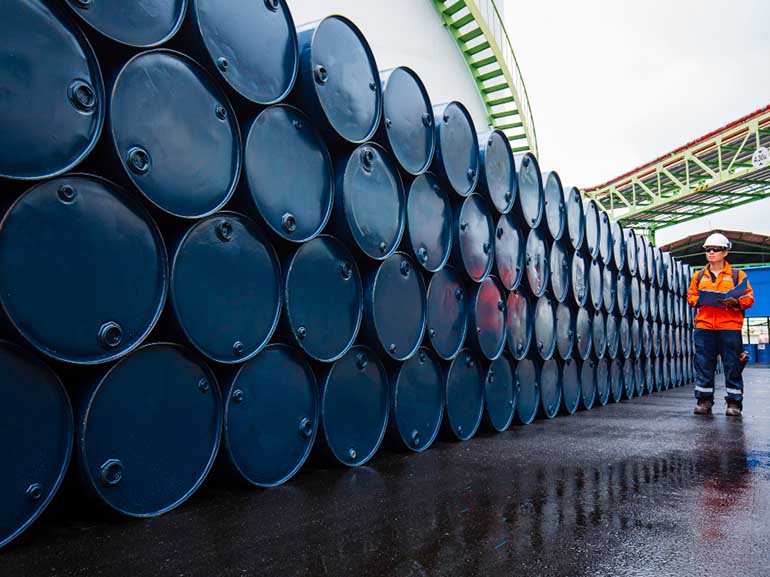
The 2026 Middle East conflict triggered one of the largest oil price shocks in recent history.
Brent crude surged to ~$120/barrel at the March 2026 peak on Hormuz disruption fears.
Physical supply shortages were limited; markets priced risk expectations, not actual barrels.
Emergency SPR releases of ~400 million barrels helped stabilise prices.
Oil prices experienced price volatility as shifting Middle East dynamics affected market sentiment.
Brent retreated to the low $70s by end of June 2026 as ceasefire talks progressed.
Geopolitical risk premiums can appear and vanish faster than supply-demand fundamentals shift.
Traders should monitor shipping routes, volatility indicators, and macro data alongside production figures
The three price levels referenced throughout this article tell a sequential story that is easy to lose across separate sections. In chronological order:
Early 2026 - ~$62/barrel (pre-conflict baseline) Before hostilities escalated, Brent crude traded in the low-$60s, reflecting subdued demand growth expectations, rising non-OPEC supply, and OPEC+ production management. This serves as the baseline against which the conflict shock should be measured. (Source: CNBC)
March 2026 - ~$120/barrel (peak) The acute phase of the crisis drove Brent toward $120/barrel, representing an approximately 65% surge from the pre-conflict baseline. The World Bank attributed this to fear-driven pricing around Strait of Hormuz disruptions rather than confirmed physical shortages. (Source: World Bank)
Late June 2026 - Low $70s/barrel (post-ceasefire retreat) As ceasefire negotiations advanced, tanker traffic through the Strait of Hormuz resumed, and the IEA's coordinated 400-million-barrel SPR release took effect, Brent retreated sharply to the low-$70s range - erasing most of the conflict premium within weeks. (Source: CNBC)
The speed of both the spike and the reversal illustrates a core feature of geopolitically-driven oil markets: risk premiums can be priced in and priced out faster than physical supply conditions change.
Early August 2026 - ~$83/barrel (renewed de-escalation hopes) Brent entered August substantially above its late-June lows but briefly fell to around $83/barrel on 2 August after President Trump paused planned U.S. strikes and indicated that the outlines of an agreement to reopen the Strait of Hormuz were being discussed. The move was sharp: Brent prices dropped as markets priced in the possibility of a reduction in regional hostilities and improved oil flows. OPEC+ also approved a modest production increase, adding further downward pressure on prices. (Source: Bloomberg)
11-12 August, 2026 -~$89-90/barrel (risk premium rebuilds) That optimism proved fragile. By 11 August, Brent had climbed back toward $90/barrel as progress toward the U.S.-Iran agreement slowed and uncertainty persisted over the reopening of the Strait of Hormuz. (Source: The New York Times)
The rebound continued into 12 August morning. Brent futures traded at around ~$89.63/barrel, as fresh attacks on shipping near Yemen renewed concerns about Middle Eastern supply routes. The increase came despite rising U.S. crude inventories, illustrating how geopolitical supply concerns were again outweighing otherwise bearish market fundamentals. (Source: The Business Times)
In commodity markets, the geopolitical risk premium is the additional value traders assign to oil due to the risk of future supply disruptions rather than actual shortages.
Normally, oil prices reflect expectations for:
Global demand
OPEC+ production
U.S. shale output
Inventories
Economic growth
During geopolitical crises, however, markets begin pricing probabilities rather than physical barrels.
This occurred rapidly following the outbreak of hostilities in early 2026.
According to the International Energy Agency (IEA):
Nearly 20 million barrels per day (mb/d) of crude oil and petroleum exports were disrupted as tanker traffic through the Strait of Hormuz slowed dramatically.
At least 8 mb/d of crude production was temporarily shut in.
Brent crude surged toward $120 per barrel before easing as markets anticipated policy responses and reserve releases.
These price movements reflected expectations of supply risk rather than immediate shortages in consuming nations.
Few locations carry greater strategic importance than the Strait of Hormuz.
The narrow waterway connects the Persian Gulf to global markets and typically handles approximately:
20-21 million barrels of oil per day
Roughly one-fifth of the global oil supply
About one-quarter of the global LNG trade
According to both the International Monetary Fund (IMF) and the U.S. Energy Information Administration (EIA), prolonged disruption at the Strait of Hormuz represents one of the world's largest energy security risks.
Because Saudi Arabia, Iraq, Kuwait, the UAE and Qatar depend heavily on this corridor, even temporary interruptions immediately influence futures markets.
Interestingly, oil prices reacted almost instantly while physical shortages emerged much more gradually.
The World Bank estimates that Brent crude prices increased approximately 65% during the most acute phase of the crisis (in March 2026), reflecting fears over supply rather than actual consumption shortages. (Source: World Bank)
Likewise, the EIA reported Brent climbing to roughly $94 per barrel shortly after the conflict intensified, around 50% higher than at the beginning of the year. (Source: EIA)
This could mean that oil markets trade expectations first and physical supply second (though past performance does not reflect future results).
Unlike previous geopolitical shocks, governments responded quickly.
The International Energy Agency announced a coordinated release of approximately 400 million barrels from emergency reserves to stabilise markets and reassure participants that physical shortages could be mitigated.
Strategic reserves cannot permanently replace disrupted production, but they buy valuable time while producers restore exports and shipping routes reopen.
By the end of June 2026, crude prices had retreated significantly.
Several developments contributed:
increased tanker traffic through the Strait of Hormuz;
ceasefire negotiations between the United States and Iran;
strategic reserve releases;
weaker-than-expected demand growth in China;
expectations that OPEC+ and non-OPEC producers would gradually restore supply.
OPEC+ had signalled a planned output increase of approximately 2.2 mb/d across its member countries as part of its phased production restoration schedule introduced in early 2026.
Market reports show Brent returning toward the low-$70-per-barrel range as shipping activity resumed. (Source: CNBC)
Nevertheless, oil prices rebounded in August as developments surrounding the U.S.-Iran conflict and the Strait of Hormuz once again became the dominant drivers of the market.
On 2 August, Brent briefly fell to around $83 per barrel after President Trump paused planned U.S. strikes and indicated that discussions were underway on a possible agreement to reopen the Strait of Hormuz. The decline reflected expectations that easing regional tensions could improve oil flows through the key shipping route. A modest OPEC+ production increase added to the downward pressure on prices. (Source: Bloomberg)
However, the optimism may have proved short-lived. By 11 August, Brent had recovered toward $90 per barrel as progress toward a U.S.-Iran agreement slowed and uncertainty over the Strait of Hormuz persisted. The renewed geopolitical risk premium pushed prices higher despite expectations of additional supply. (Source: The New York Times)
The rebound remained evident on the morning of 12 August, when Brent futures traded around $89.63 per barrel. Fresh attacks on shipping near Yemen heightened concerns about the security of Middle Eastern supply routes. Prices remained elevated despite rising U.S. crude inventories, highlighting how geopolitical supply risks were once again outweighing otherwise bearish market fundamentals. (Source: The Business Times)
Overall, Brent’s movements in early August illustrated the market’s continued sensitivity to developments in the Middle East: signs of de-escalation pushed prices lower, while renewed uncertainty over regional supply routes quickly restored the geopolitical risk premium.
The rapid reversal highlights another feature of geopolitical pricing:
Risk premiums can disappear almost as quickly as they emerge.
Despite lower prices, the underlying vulnerabilities remain.
The World Bank notes that global oil markets are expected to remain tight whenever geopolitical uncertainty threatens major export routes, particularly in the Middle East.
Similarly, the IEA continues to identify geopolitical instability as a significant driver of supply expectations, inventory management, and price volatility.
In other words, lower prices should not be confused with lower geopolitical risk.
For energy traders, the lessons of 2026 extend beyond this specific conflict.
Maritime chokepoints increasingly determine market sentiment.
Tanker traffic through Hormuz can influence futures prices before production data changes.
Traditional supply-demand models frequently underestimate geopolitical shocks.
Military escalation, sanctions, cyberattacks, or shipping disruptions can alter prices long before official production figures are published.
Periods of geopolitical uncertainty typically see:
higher implied volatility,
wider option premiums,
greater demand for hedging strategies.
Monitoring volatility indices alongside crude futures can provide early signals of changing market sentiment.
Geopolitical risk alone does not sustain high prices.
Demand from China, U.S. production growth, OPEC+ policy, inventory levels, and central bank expectations ultimately determine whether elevated prices persist once immediate risks fade.
The events of 2026 reaffirmed that oil remains one of the world's most geopolitically sensitive assets.
Although technological advances, diversified supply chains, and expanding production outside the Middle East have reduced dependence on any single producer, no market has eliminated its exposure to geopolitical shocks.
As long as a substantial share of global energy flows through strategic chokepoints such as the Strait of Hormuz, geopolitical developments will continue to shape crude prices alongside traditional market fundamentals.
For investors and traders alike, understanding the interaction between diplomacy, military risk, and energy logistics is no longer optional; it is an essential part of analysing the global oil market.
The events of 2026 underscored that crude oil remains deeply influenced by geopolitics. While traditional fundamentals such as supply, demand, inventories, and OPEC+ policy continue to shape long-term price trends, military conflicts, sanctions, and disruptions to critical shipping routes can rapidly trigger significant price swings by increasing the market's geopolitical risk premium.
Although Brent crude retreated after emergency reserve releases, improving tanker traffic through the Strait of Hormuz, and progress in ceasefire negotiations, the structural risks facing global energy markets have not disappeared.
As long as a substantial share of the world's oil and LNG exports passes through strategic chokepoints, geopolitical developments will remain a key driver of market sentiment and volatility.
For traders, this means analysing oil markets requires more than monitoring production data. Keeping track of geopolitical developments, shipping activity, volatility indicators, and macroeconomic trends is essential to understanding how crude prices may react during periods of heightened uncertainty.
*Past performance does not guarantee future results. The above is for marketing and general informational purposes only, and are only projections and should not be taken as investment research, investment advice or a personal recommendation.
The geopolitical risk premium is the additional price traders assign to crude oil because of the possibility of future supply disruptions caused by wars, sanctions, political instability, or disruptions to major shipping routes, even if physical supply has not yet been affected.
The Strait of Hormuz is one of the world's most important energy chokepoints, with around 20-21 million barrels of oil passing through it each day, roughly one-fifth of global oil consumption. Any disruption to shipping through the strait can quickly increase concerns about global supply and drive oil prices higher.
Oil prices declined as fears of prolonged supply disruptions eased. Factors including increased tanker traffic through the Strait of Hormuz, ceasefire negotiations, coordinated releases from strategic petroleum reserves, and expectations of higher future production helped reduce the geopolitical risk premium.
Crude oil futures reflect expectations about future supply and demand. During geopolitical crises, traders often price in the probability of supply disruptions before actual shortages occur, making futures prices highly sensitive to political and military developments.
Strategic petroleum reserves can help reduce short-term market disruptions by increasing available supply during emergencies. However, they are intended as temporary measures and cannot fully replace prolonged production losses or resolve underlying geopolitical tensions.
Yes. Although technological advances and diversified sources of production have improved the resilience of global energy markets, geopolitical events remain one of the most significant drivers of short-term oil price volatility. Military conflicts, sanctions, and disruptions to major export routes can still influence prices as much as traditional supply-and-demand fundamentals.
Oil prices surged during the 2026 Middle East conflict, driven by supply disruption fears and heightened geopolitical risk. Brent crude and WTI saw sharp swings, with volatility creating both significant profit opportunities and elevated risk of losses for traders.
A Strait of Hormuz disruption directly impacts LNG prices, as roughly 20% of global LNG trade passes through it. Any blockage or threat forces shipments onto longer, costlier routes - driving up freight costs and tightening supply, which pushes LNG prices sharply higher. For traders, this heightened volatility can mean significant profit opportunities alongside elevated risk of losses.



Learn insights through informative videos, webinars, articles, and guides with our comprehensive Trading Academy.
Discover what’s trending in and outside of Plus500.
This information is written by Plus500 Ltd. The information is provided for general purposes only, and does not take into account any personal circumstances or objectives. Before acting on this material, you should consider whether it is suitable for your particular circumstances and, if necessary, seek professional advice. No representation or warranty is given as to the accuracy or completeness of this information. It does not constitute financial, investment or other advice on which you can rely. Any references to past performance, historical returns, future projections, and statistical forecasts are no guarantee of future returns or future performance. Plus500 will not be held responsible for any use that may be made of this information and for any consequences that may result from such use. Hence, any person acting based on this information does so at their own discretion. The information has not been prepared in accordance with legal requirements designed to promote the independence of investment research.
Cryptocurrency CFDs are not available to Retail Clients.